TV Bed vs End-of-Bed TV Stand - Which One Actually Makes Sense?
If you've been searching for ways to watch TV from bed, you've probably landed on two very different products: a TV bed, or a simple stand or unit positioned at the foot of the bed. They solve the same problem- a screen you can see without craning your neck - in completely different ways, and which one's right for you comes down to a few honest trade-offs rather than one being objectively "better."
Full disclosure before we start: we're TV Beds Northwest. We sell TV beds. So you're well within your rights to assume we're going to talk our own products here, but we'd rather you buy the right thing for your room than the thing we happen to sell, so we've tried to give the stand a fair hearing too.
Upfront cost
There's no getting around it: an end-of-bed TV stand is cheaper. You can pick one up from most furniture retailers for well under £150, while a TV bed is a bigger single purchase because it's replacing your entire bed frame, not just adding a piece of furniture. If budget is the only factor, the stand wins on price alone.
But that comparison only holds if you're buying a stand and a bed separately anyway. If you already need a new bed frame, the maths changes; you're comparing a TV bed against a standard bed frame plus a TV stand bought on top, and the gap narrows considerably. (Yes, that's a convenient argument for a company that sells TV beds to make. It also happens to be true; check the numbers yourself before you take our word for it.)
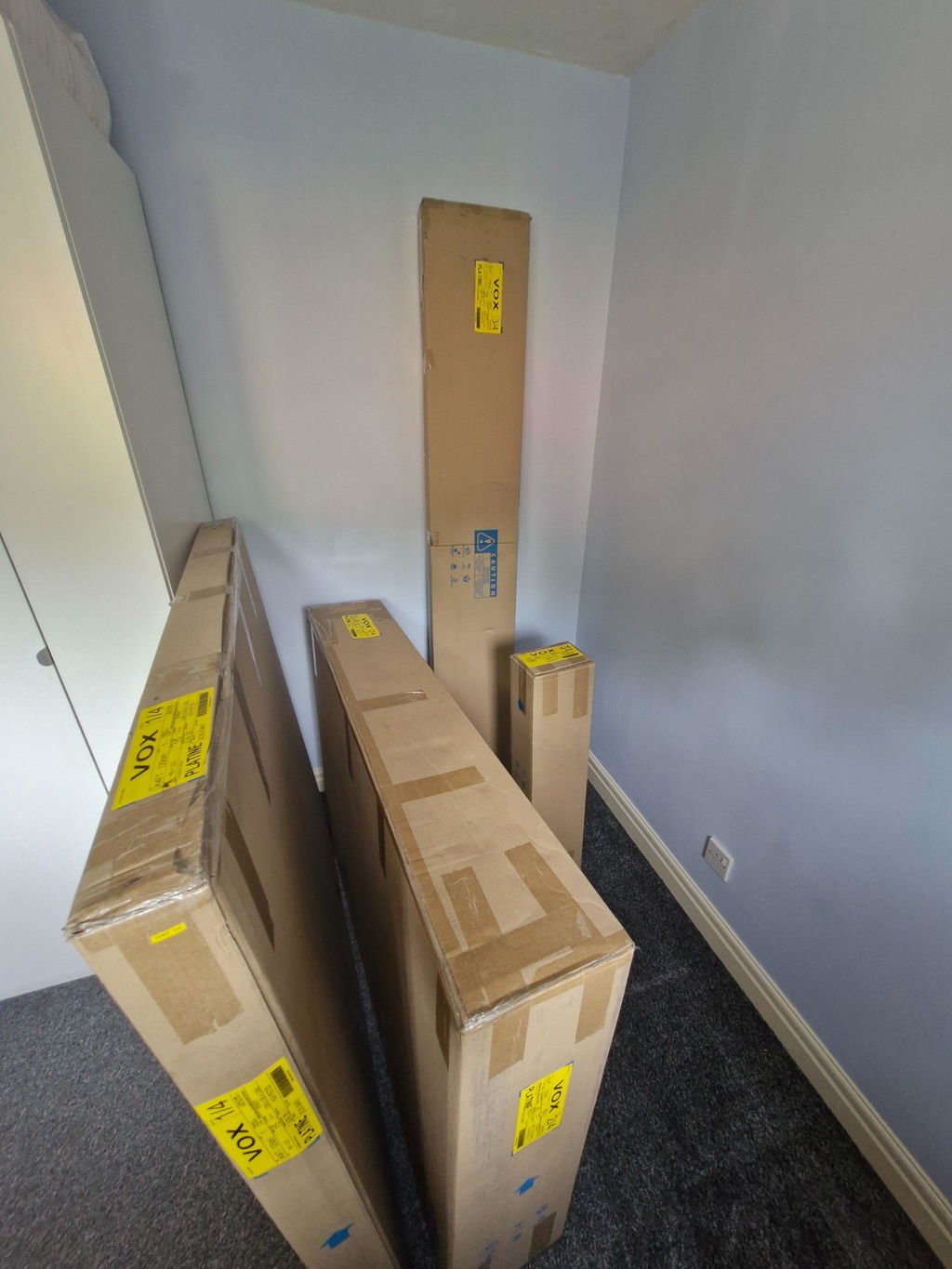
It's also worth knowing the entry point is lower than people expect. The VOX starts from £650, and the Amber 4.1 — currently on sale from £895 — gets you ottoman storage and a built-in 4.1 sound system, not just a bed with a hole cut in the end of it. Neither is going to undercut a £50 stand from a furniture warehouse, but they're a lot closer than the eye-watering end of the market suggests.

Floor space
This is where the comparison gets more interesting. An end-of-bed TV stand needs its own footprint, typically 3 to 4 feet of floor space between the foot of the bed and the wall, permanently occupied. In a large bedroom, that's rarely an issue. In a small double or box room, it's often the difference between a room that feels comfortable and one that feels cramped.
A TV bed keeps the television inside the bed's own footprint. There's no separate unit to walk around, nothing extra to dust, and no dead space dictated by where the stand needs to sit. If square footage is tight, this is the single biggest practical advantage a TV bed has.
Storage
A stand gives you some shelving or a cupboard underneath, useful, but limited. Most TV beds are built on an ottoman base, which means the entire area under the mattress becomes storage, easily enough for bedding, seasonal clothes, or the contents of an entire chest of drawers. The Titan 4.1, for example, pairs a full ottoman base with its multimedia system, so the storage argument isn't a trade-off against the TV, you get both from the same lift. If you're trying to solve a storage problem as well as a "where does the TV go" problem, the stand doesn't come close.

What each one gets wrong
Neither option is perfect, and it's worth being upfront about the downsides.
A TV stand can look cluttered fast: cables, a soundbar, a games console, and the remote all end up on or around it, and it's permanently on display whether or not you're watching anything. Bumping into it in a small room is a genuine, mildly annoying reality too.
A TV bed's main downside is that it's a bigger decision to reverse. If you move house or change your mind about wanting the TV in your bedroom, you're not just returning a stand — you're changing your bed. It's also worth checking a TV bed's maximum screen size and weight rating before you buy, since not every mechanism is built the same (see our guide on how TV beds actually work for more on that).
If you're leaning towards a TV bed, here's where to start
Not every TV bed is chasing the same thing, so it's worth knowing roughly which model answers which version of the "why not just get a stand" question:
- Tightest budget: the VOX (from £650) or the Amber 4.1 (from £895) — both keep the price close to "bed frame plus decent stand" territory.
- Storage is the priority: the Titan 4.1, built by Kaydian specifically around a full ottoman base.
- You want cinema sound, not just a screen: the Edge or Darras, both built around Dolby Atmos 5.1.2 surround sound rather than a bare speaker bar.
- You don't want to buy a TV separately at all: the Adjustable Titan 4.1 currently comes with a free 43" LG Smart TV included, which sidesteps the "does it come with the TV" question entirely.

So which one should you get?
If you've got a spacious bedroom, don't need extra storage, and want the cheapest possible way to get a TV at the end of your bed, a stand does the job perfectly well. There's no need to overcomplicate it, and no, we're not going to pretend otherwise just because it isn't what we sell.
If floor space is limited, you're short on storage, or you'd simply rather the TV disappeared out of sight when you're not using it, a TV bed solves three problems with one purchase instead of stacking furniture to solve them separately.
Our full TV bed range is built to make that trade-off an easy one, with finance available if you'd rather spread the cost. If you're still weighing it up, get in touch, and we'll talk you through what actually fits your room.